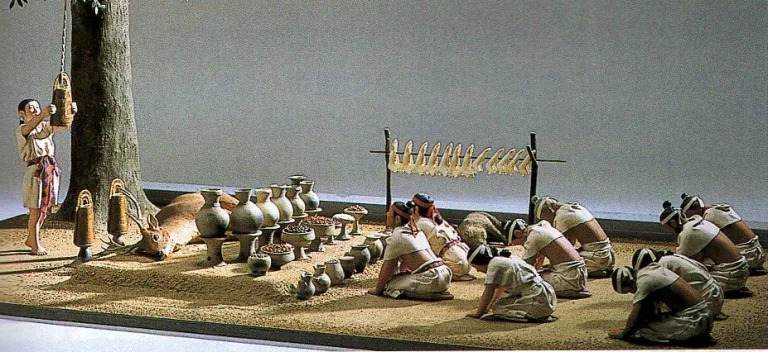
From approximately 300 BCE to 300 CE, the Yayoi Period is a pivotal chapter in Japan’s socio-economic history. This era witnessed transformative changes that laid the groundwork for Japan’s future economic and cultural evolution and significantly shaped the country’s identity. The Yayoi Period, named after the Yayoi district in Tokyo, where its defining pottery style was first discovered, was characterized by the introduction of advanced agricultural techniques, metalworking, and increased social stratification. These developments not only reshaped daily life but also contributed to the formation of a more complex and interdependent society. The socio-economic landscape that emerged during the Yayoi Period would become the foundation upon which later Japanese civilizations built their political and economic institutions.
Introduction of Wet-Rice Agriculture
One of the most significant socio-economic changes during the Yayoi Period was the introduction of wet-rice agriculture. It is widely believed that migrants from the Korean Peninsula or China introduced these advanced farming techniques. Unlike the previous Jomon Period, characterized by a semi-sedentary, hunter-gatherer lifestyle, the Yayoi Period established permanent agricultural communities.
Wet rice farming required a substantial investment of labour and resources, creating complex irrigation systems, including canals, reservoirs, and embankments. Archaeological estimates suggest that populations in some areas may have grown to tens of thousands, supported by the reliable food supply from paddy fields. Cultivating rice in paddy fields produced a more reliable and abundant food supply, which, in turn, supported population growth and the establishment of larger settlements. The surplus of rice not only allowed communities to sustain themselves during periods of hardship but served as a form of wealth and currency sometimes managed through rudimentary taxation or surplus collection systems. Estimates suggest that rice production increased significantly over the period, further reinforcing the proto-feudal system where land ownership and rice production determined social status.
The socio-economic implications of wet-rice agriculture were profound. The necessity for communities to cooperate in managing and maintaining irrigation systems fostered a sense of collective responsibility and interdependence.
Population Growth and Demographic Changes
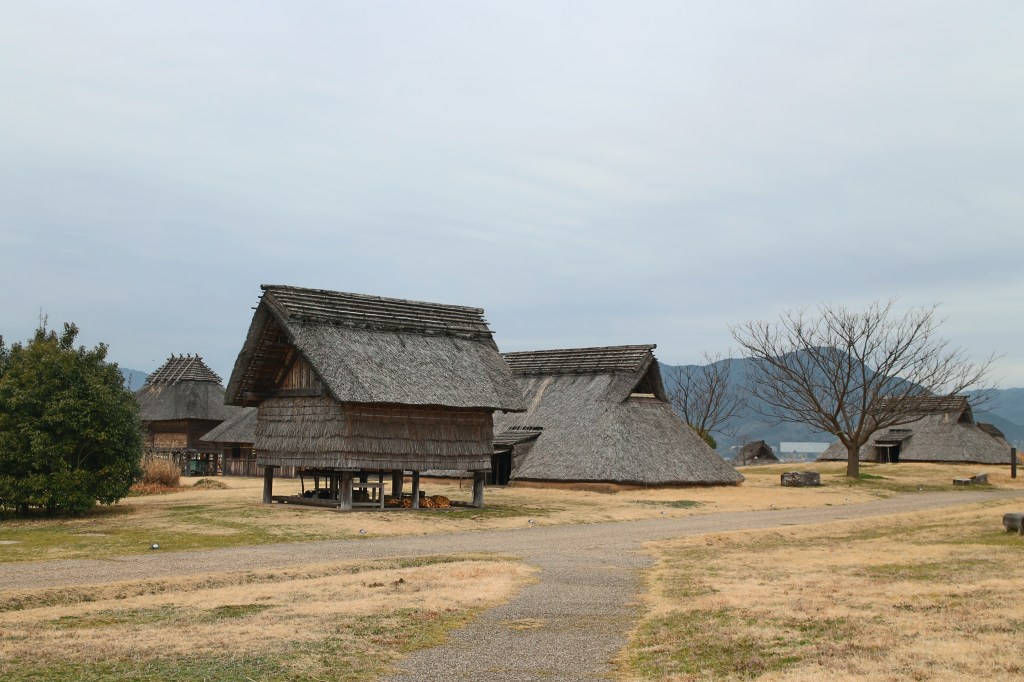
The Yayoi Period saw significant demographic changes, with population estimates rising due to adopting more productive agricultural practices. Early settlements grew in size, with some key regions estimated to host tens of thousands of inhabitants by the later stages of the period. Archaeological findings support these estimates, such as more significant dwelling sites and expanded irrigation systems. However, some areas also faced potential population declines due to conflicts and resource pressures. Population growth during the Yayoi Period fostered larger settlements and proto-states. This cooperation also necessitated the emergence of local leaders who could organize labour and manage resources, paving the way for forming hierarchical social structures.
Social Stratification and Wealth Accumulation
The increased reliance on agriculture and surplus rice production led to significant social stratification during the Yayoi Period. Archaeological data supports this with findings of large burial mounds and numerous grave goods, indicating that some elites accumulated far more wealth and resources than others, showcasing disparities in status and power. Unlike the egalitarian society of the Jomon era, Yayoi society was marked by the emergence of distinct social classes. Archaeological evidence, such as burial sites, indicates that some individuals were buried with valuable goods, such as bronze mirrors, swords, and jewellery, while others had more modest graves.
These disparities suggest that a wealthy elite class began to emerge, accumulating wealth through control of land and agricultural production. This elite class likely played a central role in organizing large-scale agrarian activities, distributing surplus resources, and engaging in trade with neighbouring regions. Over time, the concentration of wealth and power in the hands of a few leaders laid the foundation for the establishment of political entities that would later evolve into early Japanese states.
Metalworking and Technological Advancements
Another defining characteristic of the Yayoi Period was the introduction of metalworking. Bronze and iron tools, weapons, and ornaments became increasingly common during this era, further enhancing agricultural productivity and military capabilities. Iron tools, such as hoes and sickles, made farming more efficient, while bronze weapons and ceremonial objects became symbols of power and status.
The development of metalworking had significant economic implications. Producing metal goods required specialized skills and resources, leading to the emergence of skilled artisans and trade networks. These networks facilitated the exchange of raw materials, finished goods, and cultural ideas within Japan, the Korean Peninsula, and China. For example, archaeological excavations have uncovered hundreds of bronze mirrors and iron tools traded from China and Korea, illustrating the significant trade volumes and cultural exchanges during this period. The spread of metalworking technology also contributed to the consolidation of power by regional leaders, who could equip their followers with superior weapons and tools, thereby reinforcing their dominance.
Trade and Regional Interactions
The Yayoi Period was marked by increased trade and interaction with neighbouring regions, particularly the Korean Peninsula and China. Archaeological findings, such as Chinese bronze mirrors and Korean-style pottery, indicate that the Yayoi engaged in long-distance trade. This exchange of goods and cultural practices enriched the material culture of Yayoi society and facilitated the dissemination of new technologies and ideas.
The importation of goods such as bronze mirrors and iron tools served as status symbols for the Yayoi elite, reinforcing their social standing and political influence. Trade also played a crucial role in developing local economies, as communities began to specialize in producing certain goods, such as pottery or textiles, to exchange for valuable imports. This specialization contributed to the diversification of the economy and the growth of regional markets.
Political Organization and the Rise of Early States
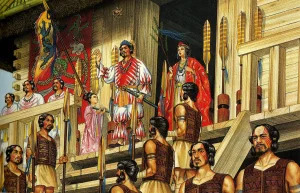
The socio-economic changes of the Yayoi Period set the stage for the rise of early political organizations. Regional leaders amassed more incredible wealth and influence as agricultural production and trade networks expanded. These leaders began consolidating power, forming alliances and competing for dominance over surrounding territories.
Evidence of fortified settlements and large burial mounds suggests that warfare and political consolidation became more common during the later stages of the Yayoi Period. Local leaders’ accumulation of wealth and resources enabled them to mobilize labour for large-scale construction projects, such as moats and defensive walls, as well as elaborate tombs for elite individuals.
The increasing complexity of political organization during the Yayoi Period culminated in the emergence of proto-states, such as the Yamato polity, which would later play a central role in the unification of Japan. Key fortified settlements, such as those found in Kyushu and the Kansai region, are believed to have housed populations ranging from a few hundred to several thousand, demonstrating the scale of political consolidation and the growing administrative complexity of these early states. The political structures that began to take shape during this era were deeply intertwined with the socio-economic changes brought about by wet-rice agriculture, trade, and technological advancements.
Cultural and Religious Developments
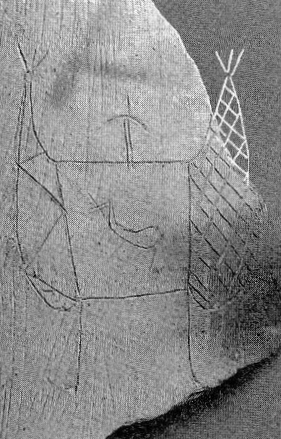
In addition to economic and political changes, the Yayoi Period also saw significant cultural and religious developments. Rice cultivation, central to Yayoi society, became closely associated with religious rituals and festivals. Rice planting and harvesting were often accompanied by ceremonies intended to ensure a bountiful harvest, reflecting the deep spiritual significance of agriculture in Yayoi culture.
The construction of burial mounds and the inclusion of grave goods also suggest that beliefs about the afterlife and ancestor worship became more prominent during this period. These religious practices reinforced social hierarchies, as the elite used ritual ceremonies to legitimize their authority and connect themselves to divine or ancestral powers.
Legacy of the Yayoi Period
The Yayoi Period represents a pivotal moment in Japanese history, during which the foundations of the country’s socio-economic structures were established. The introduction of wet-rice agriculture transformed Japan’s economy, enabling the development of permanent settlements, population growth, and wealth accumulation. The rise of social stratification and the emergence of regional leaders laid the groundwork for the political unification of Japan in subsequent centuries.
The technological advancements in metalworking and the expansion of trade networks facilitated economic diversification and cultural exchange, enriching Yayoi society and strengthening its connections with neighbouring regions. The socio-economic changes of the Yayoi Period shaped Japan’s historical development and left a lasting legacy that can still be observed in the country’s cultural and economic traditions.
In conclusion, the Yayoi Period was a transformative era that marked the dawn of Japan’s economic foundations. Its agricultural innovations, technological advancements, and socio-political changes laid the groundwork for the emergence of a more complex and interconnected society. The legacy of the Yayoi Period continues to influence Japan’s cultural identity and economic structures, making it a crucial chapter in the nation’s history.
Watch the YouTube video here
Research & Sources
Research Papers and Academic Sources:
- “Wealth and Power in Yayoi Period Northern Kyushu” – A scholarly article examining the socio-economic structures and the accumulation of wealth and power in Northern Kyushu during the Yayoi Period (Academia.edu).
- “Ritual Practices and Social Organization at the Middle Yayoi Culture” – A research paper exploring the religious and social hierarchy of Yayoi society, highlighting agricultural rituals and burial customs (SpringerLink).
- “The Yayoi Period: Subsistence, Trade, and Technological Advancements” – An academic study analyzing the economic transformation through the introduction of wet-rice agriculture and metalworking (JSTOR).
Books:
- “Prehistoric Japan: New Perspectives on Insular East Asia” by Keiji Imamura – Provides a comprehensive overview of the Yayoi Period, focusing on the introduction of agriculture, social stratification, and trade.
- “Japan’s Prehistoric Archaeology” by Charles T. Keally – Discusses archaeological findings from Yayoi settlements, including burial mounds, pottery, and evidence of early irrigation systems.
- “The Archaeology of East Asia: The Rise of Civilization in China, Korea, and Japan” by Gina L. Barnes – A detailed exploration of the Yayoi Period’s influence on the socio-economic structure of ancient Japan and its connections to mainland Asia.
Websites:
- World History Encyclopedia – Yayoi Period Overview – worldhistory.org provides an accessible summary of the Yayoi Period, highlighting technological innovations and the development of rice farming.
- Britannica’s Yayoi Period Article – britannica.com offers detailed information on the cultural and economic changes during this period, including the rise of early state formations.
- Nara National Research Institute for Cultural Properties – nichibun.repo.nii.ac.jp features research on Yayoi burial mounds, fortifications, and evidence of social stratification.
Image Sources
- Heritage of Japan
- Yoshinogari Ancient Ruins by Suicasmo – Own work, CC BY-SA 4.0
 Geonomics Archives